PharmacyOS
Pharmacy Management × Digital Storefront
A connected digital product that brings pharmacy operations, product data, customer experience, artificial intelligence, and production infrastructure into one system.
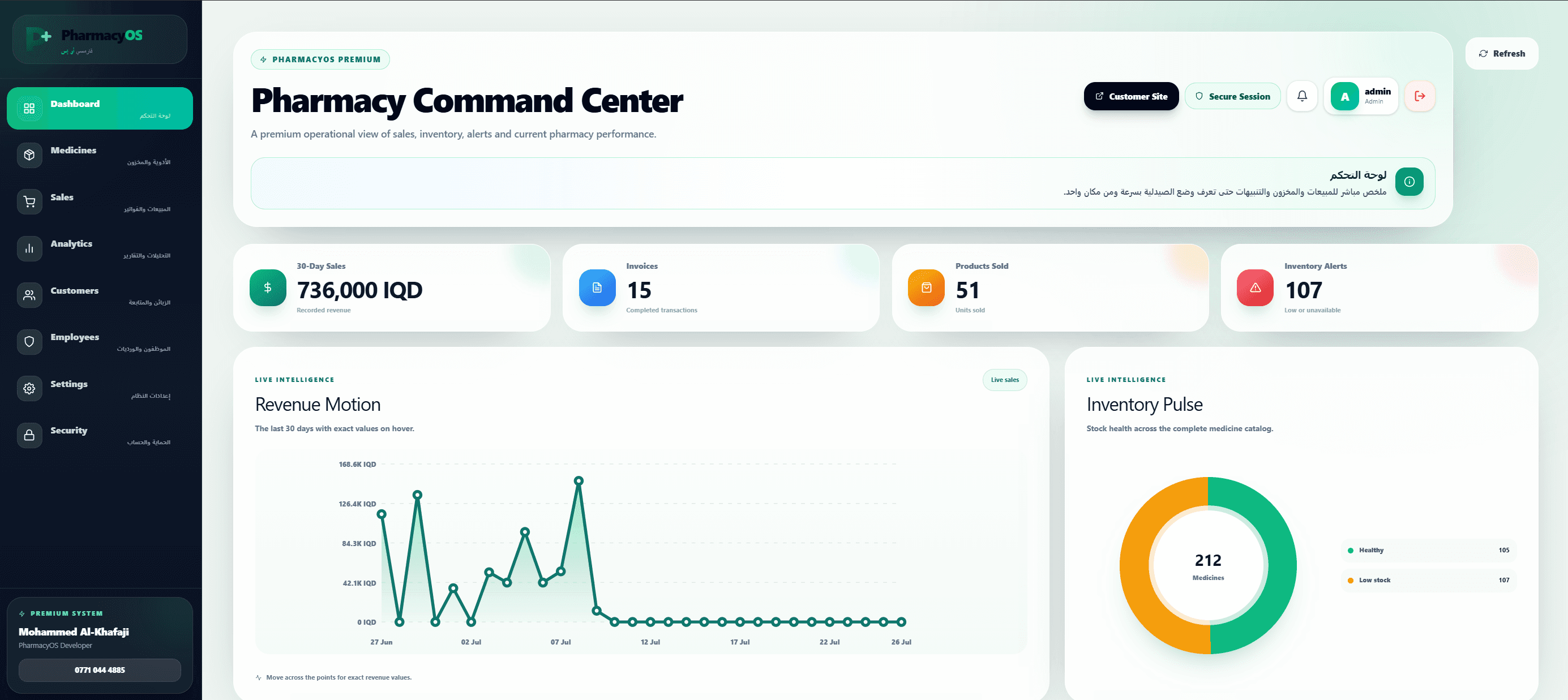
Separate workflows, one counter
Pharmacy operations, inventory data, product publishing, and the customer experience normally exist as separate workflows. PharmacyOS connects these layers so the pharmacy team can manage information centrally while customers receive a clear, responsive, Arabic digital experience.
Management and storefront are not two projects that happen to share a brand. They are two halves of one system, joined by a central API — a product published from the counter appears in the customer's catalog.
System architecture
Admin and Storefront never touch the database directly. Every operation travels through a protected API and a single data layer.
Admin Interface
Protected FastAPI API
SQLAlchemy Data Layer
PostgreSQL
Customer Storefront
Protected Backend Service
RxNorm
DailyMed
openFDA fallback
Normalized result
Platform capabilities
Operations
- Pharmacy dashboard
- Medicine and product management
- Inventory and quantity tracking
- Sales management
- Employee management
- Category and brand management
- CSV product import
Customer Experience
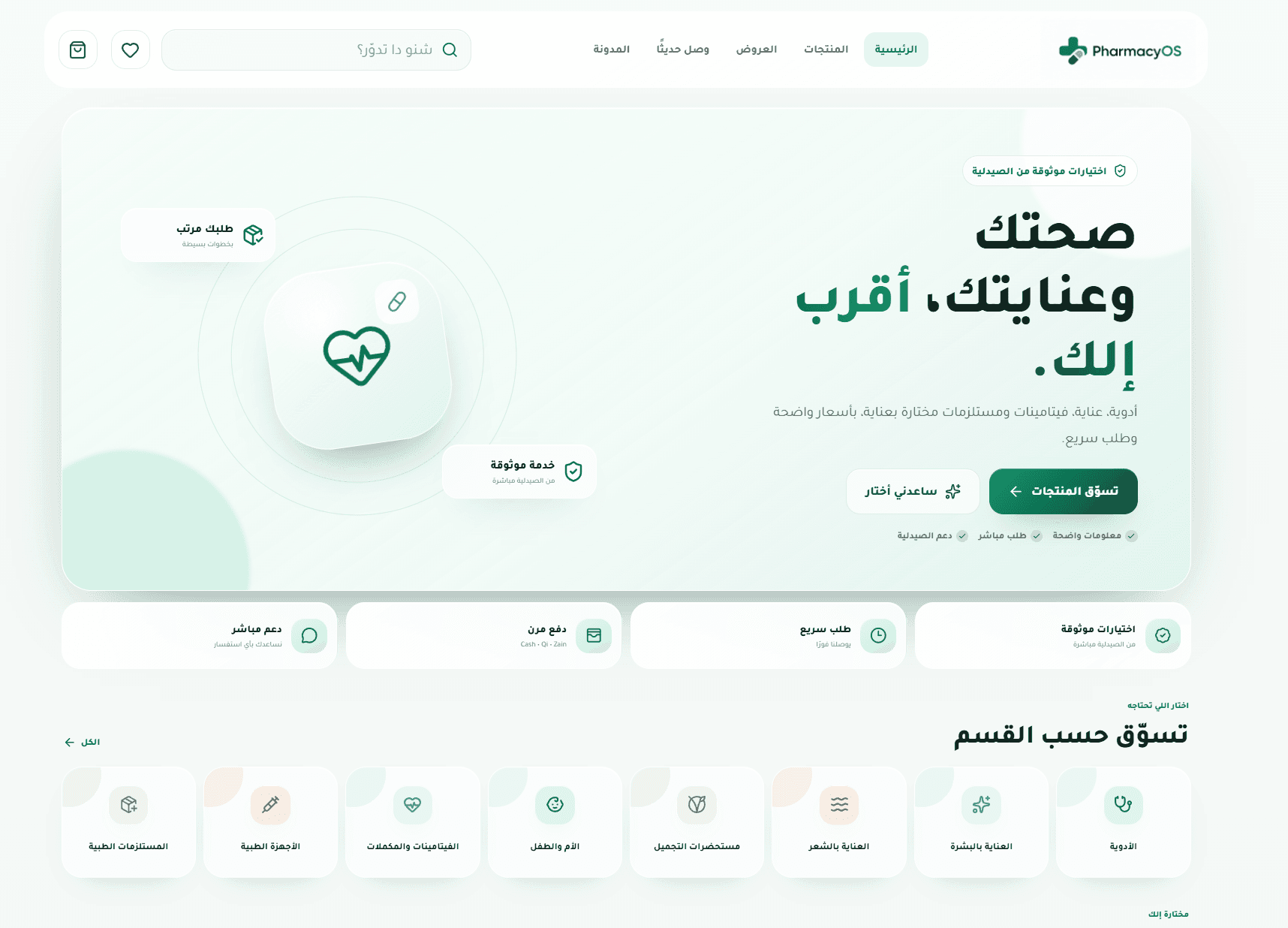
- Responsive Arabic RTL interface
- Mobile-first storefront
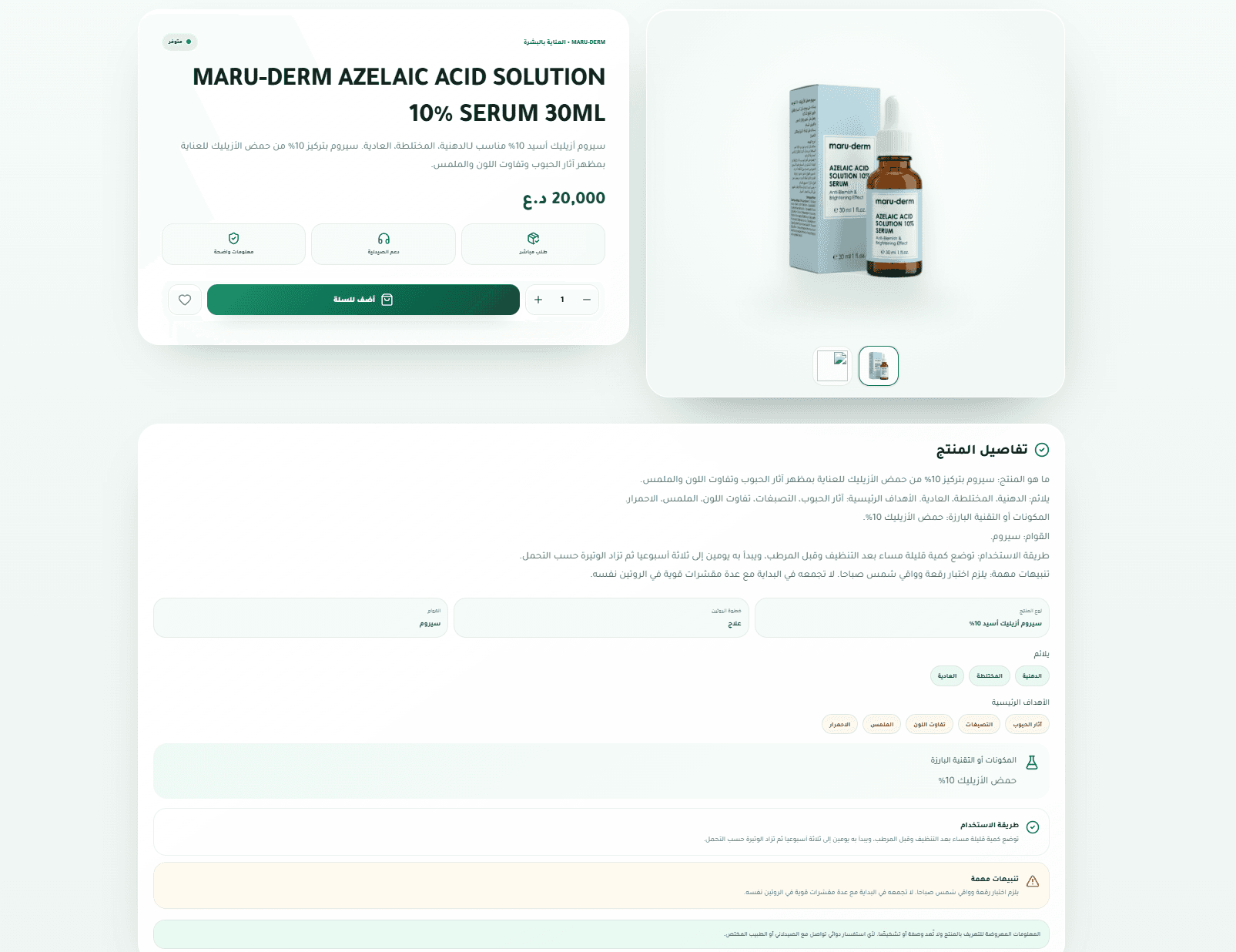
- Customer-facing product pages
- Search by name, category, manufacturer and barcode
- Featured, regular and discounted placement
- Product images and additional information
Connected Data
- Central API between management and storefront
- Internal inventory product creation
- Publishing products to the customer store
- Product synchronization between Admin and Storefront
- Synchronization of product deletions
Production Infrastructure
- FastAPI backend
- SQLAlchemy data layer
- PostgreSQL database
- Admin and Storefront on Cloudflare Pages
- Backend API on Render
- Separated Admin, Storefront, API and database layers
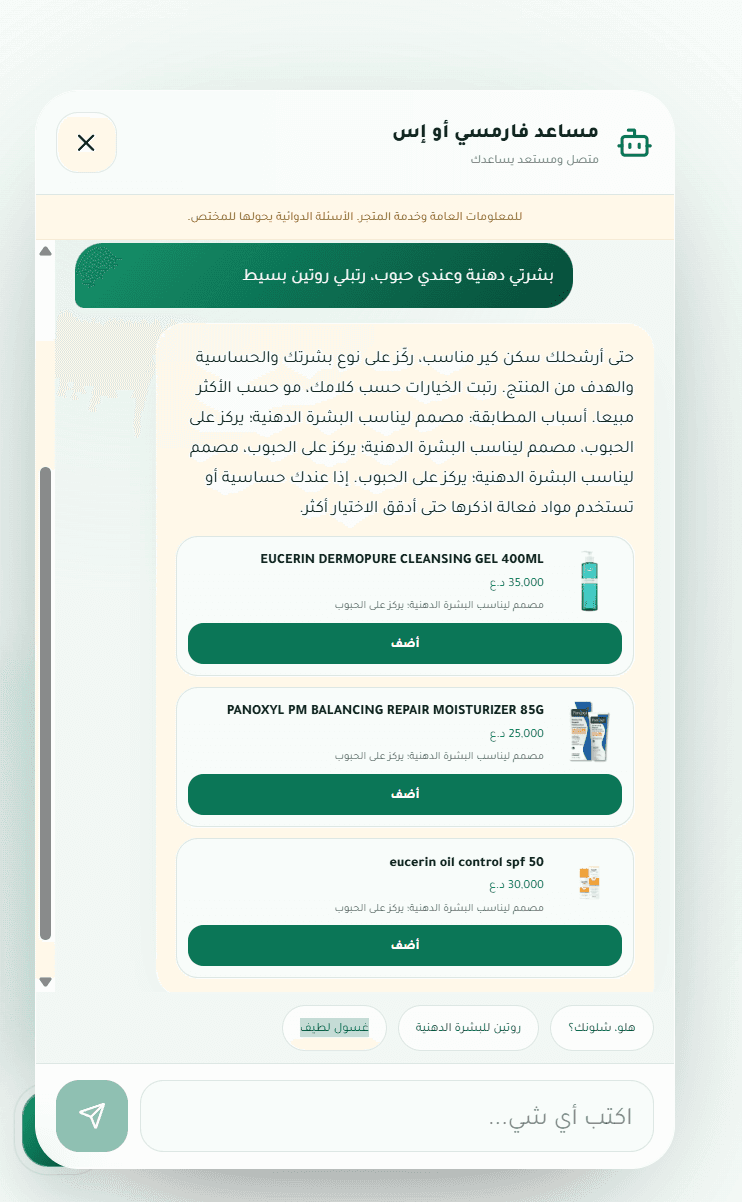
Intelligence grounded in the pharmacy's real catalog.
The assistant does not begin with a random list. It interprets the customer's request, connects it to available product information, and guides the customer toward relevant catalog options.
- A customer-facing assistant inside the storefront
- Product discovery through natural conversation
- Suggestions grounded in the available PharmacyOS catalog
- Recommendations based on the need the customer described
- Conversational guidance linked to real product pages
- Asynchronous RxNorm, DailyMed and openFDA reference integration
- Protected official drug-reference and image routes
Security engineered across every layer.
Defense in depth, described precisely — encrypted transport, signed sessions, protected routes, validated input, and server-controlled integrations.
Encrypted Transport
Production properties are served over HTTPS. TLS encrypts information while it travels between the browser and production services.
Identity & Session Integrity
Administrative authentication uses JWT bearer tokens signed with HS256. The signature protects integrity so the backend can reject altered tokens — it does not encrypt the payload.
Protected API
The browser never connects directly to PostgreSQL. Admin and Storefront communicate through the central FastAPI layer, and sensitive routes require authentication.
Validation & Data Access
Pydantic schemas validate and structure API data. Parameterized ORM operations reduce exposure to raw SQL injection patterns.
Persistent Data
Database constraints, including unique barcode handling, protect consistency. The frontend never receives database credentials; configuration stays server-side.
Controlled External References
Official references are reached through backend-controlled services. Asynchronous calls stop one provider from blocking the flow, and a fallback chain responds when the preferred source does not.
Layered protection, described accurately: TLS encrypts transport, HS256 signs tokens rather than encrypting them, and password handling is one-way hashing. No certification or penetration-test result is claimed.
Designed as a product, not a dashboard
Arabic RTL throughout, a mobile-first storefront, structured product discovery, and one visual identity carried from the management screen to the customer's product page.
The real interface
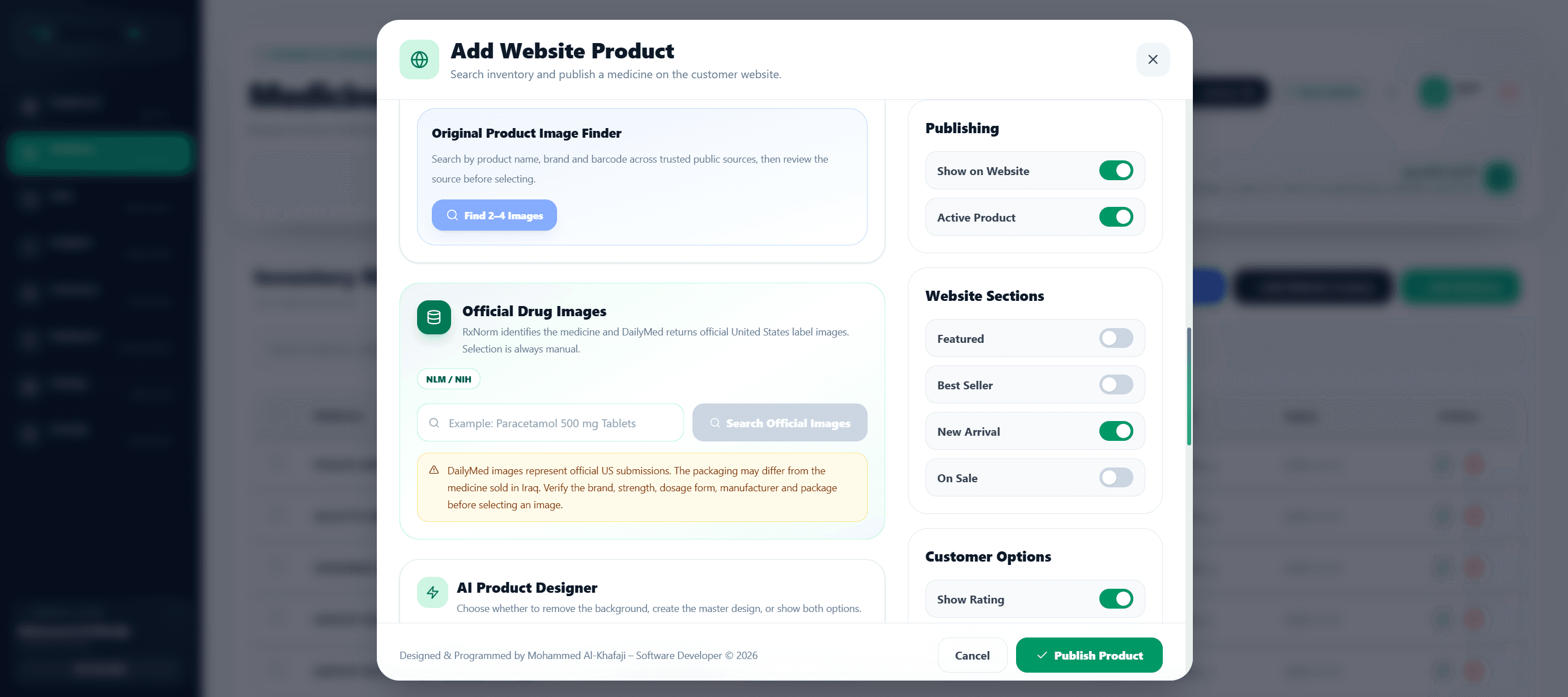
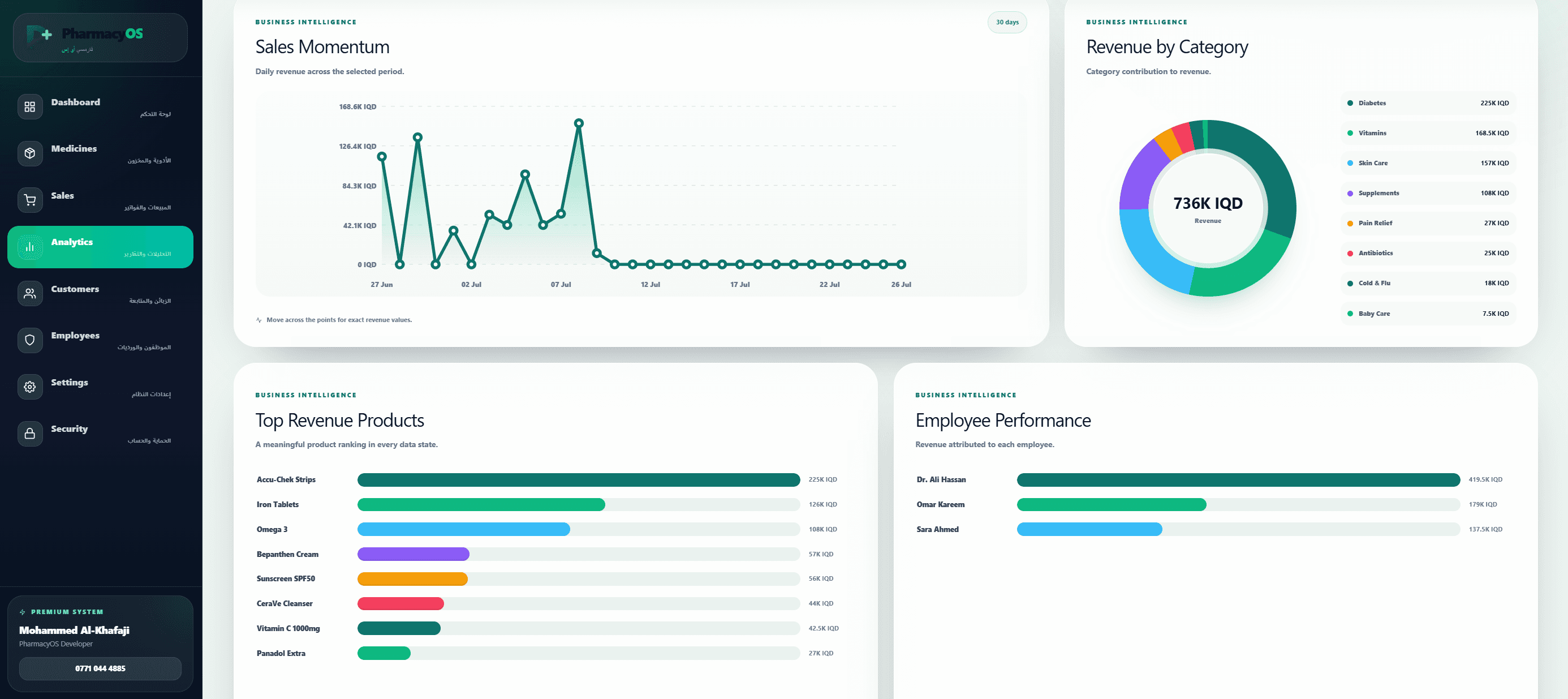
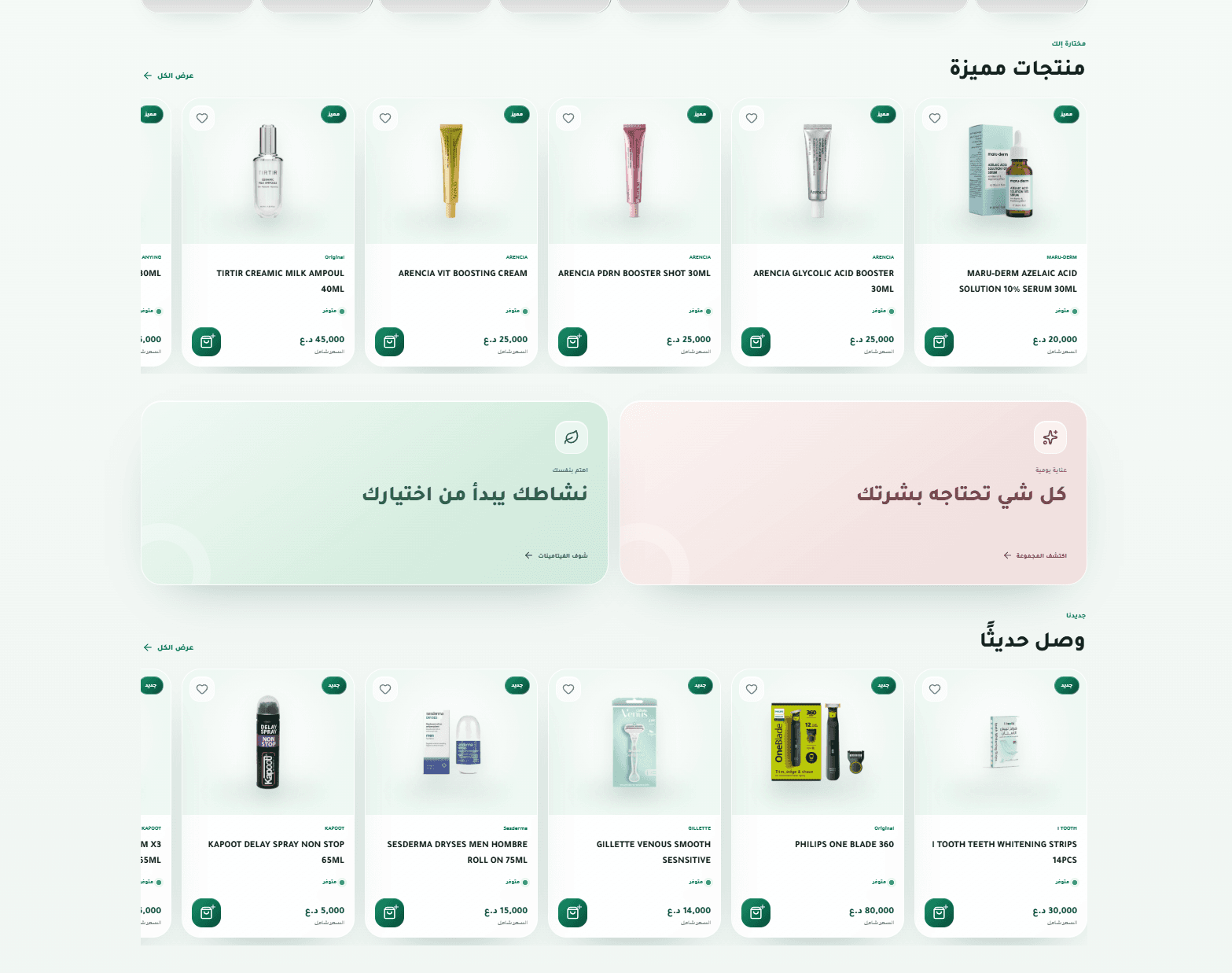
One product. Multiple disciplines.
Every layer of PharmacyOS was designed and built inside HALF.
- Product Strategy
- Brand Direction
- UX/UI Design
- Arabic RTL Experience
- Motion Design
- Frontend Engineering
- Backend Engineering
- Database Architecture
- Artificial-Intelligence Experience
- Pharmaceutical Data Integration
- Application Security
- Production Deployment
A digital product designed and developed by HALF.
Not a collection of disconnected screens.
One connected product — from pharmacy operations to the customer's next interaction.
CreativeTechnologyComplete Digital Product